
Color Fun Kids Puzzle
What players say
Color Fun Kids Puzzle is a hypercasual educational game for preschoolers. Its strength lies in removing pressure: no timers, no scores, no complex rules. Children match numbers to colors, fill sections, and optionally blend shades. The interface is built for small fingers, and the game includes no ads or external links. Parents looking for a calm, safe screen activity will find it here. The main limitation is that the input does not specify the number of pictures or platforms, so variety and availability remain unclear.
About
Matching Numbers to Colors
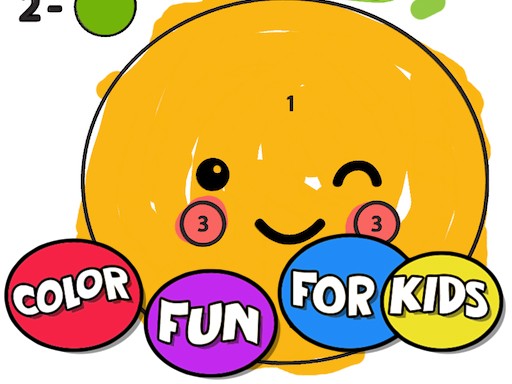
Each picture in Color Fun Kids Puzzle begins as a black-and-white outline divided into numbered sections. A guide on the side shows which number corresponds to which color. Players tap or click a section and fill it with the matching hue. The game responds immediately, so children see the picture take shape with every correct choice. No reading is required because numbers and colors are labeled clearly.
Blending and Experimenting
Beyond straightforward color matching, the game offers a blending option. Kids can mix shades to create gradients or unique combinations within a picture. This adds a layer of creative decision-making: a child can follow the numeric guide exactly or experiment with blended tones. The feature encourages exploration without penalizing mistakes, since there is no scoring system.
A Calm, Self-Paced Environment
Color Fun Kids Puzzle has no time limits, no scores, and no complex rules. Sessions are short and intuitive, which suits young attention spans. The interface uses large, simple controls designed for small fingers. Visuals are vibrant and sound effects are cheerful, but neither rushes the player. Because the game is hypercasual, children can stop and resume without losing progress or facing pressure.
Safety and Learning Goals
Developed by giugames.com, the game is built as a safe screen activity with no ads or external links. Its main educational aims are color association, fine motor practice, and hand-eye coordination. Parents can use it as a shared activity by discussing colors and numbers together. The absence of failure states means children build confidence simply by completing pictures at their own speed.
Compatibility
FAQ
Comments
Sign in to comment
You must be logged in before posting a review or rating.
No comments yet. Be the first to comment!



Editorial Notes