
Word Guess Puzzle Challenge
What players say
Word Guess Puzzle Challenge takes the hangman formula and softens it with a cheerful stickman and uncluttered presentation. The core loop is simple: guess letters, fill blanks, avoid completing the drawing. Its strengths are accessibility and short session length—no tutorial, no stress, just letter deduction. The main limitation is that the input confirms only the basic mechanic, so players seeking deep progression or confirmed word categories should check the game directly.
About
Letter-by-Letter Deduction
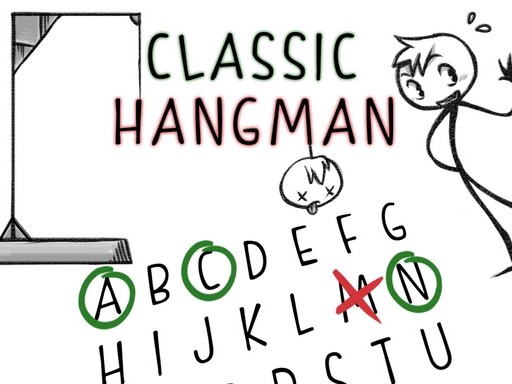
Word Guess Puzzle Challenge follows the familiar hangman format: a row of blank spaces stands for an unknown word, and you tap or click letters on an on-screen keyboard to test them. A correct letter locks into its position. A wrong one adds a segment to the stickman drawing. The round ends when you either reveal the full word or complete the figure. That single pressure point—each wrong guess visibly advances the drawing—gives every tap a clear consequence.
Stickman as Feedback, Not Punishment
The stickman here is drawn in a friendly, expressive style rather than a grim one. Its growing form acts as a visual mistake counter, so you always know how many errors remain before the round closes. Because the art is cheerful and the animation encouraging, the game keeps a light tone even as the drawing nears completion. This design choice makes the same core mechanic feel welcoming to younger players and casual adults alike.
Short Rounds, Steady Vocabulary Practice
Each word is self-contained, so sessions can be as brief as a single round or stretched across several. There is no long tutorial or setup screen—the blank spaces and keyboard are immediately readable. Over repeated rounds, players naturally absorb common letter patterns, vowel placement, and word-length cues. The game frames this as gentle mental exercise rather than a test, which suits short breaks and relaxed play.
Reading the Word Before You Tap
Because wrong guesses are costly, the smartest approach is to count the blanks first, then start with high-frequency vowels like A, E, and I, followed by common consonants such as T, N, S, and R. Word length and any revealed letters narrow the field quickly. Random guessing early burns through the stickman's remaining parts, so deliberate choices preserve your chances. With practice, recognition of common word structures speeds up solving time.
✅ Compatibility & Testing
FAQ
Comments
Sign in to comment
You must be logged in before posting a review or rating.
No comments yet. Be the first to comment!



Editorial Notes