

Puzzle Fun 3 Jigsaw Game
What players say
Puzzle Fun 3 Jigsaw Game delivers exactly what its name suggests: three colorful jigsaw puzzles with easy, medium, and hard settings. The lack of a timer and the instant browser access make it a convenient choice for casual players or families. Its main limitation is scope—only three puzzles are included, so variety is modest. Still, for a free browser game, it offers a clean, accessible puzzling experience without downloads or distractions.
About
Three Puzzles, Three Difficulty Tiers
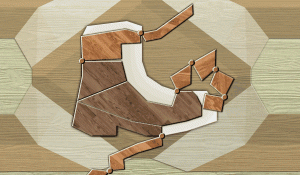
Puzzle Fun 3 presents a straightforward challenge: complete three separate jigsaw puzzles, each showing a colorful image broken into scattered pieces. The game offers three difficulty settings—easy, medium, and hard—which change how demanding each puzzle becomes. Beginners can start on the simplest setting to learn how the pieces behave, then move up as they grow more comfortable. Because the puzzles are distinct, finishing one does not mean the next will feel identical.
Dragging Pieces Into Place
Playing requires only a mouse or a finger. After choosing a difficulty from the main menu, you see pieces spread across the screen. Click or tap a piece and drag it toward its correct spot. When a piece is close enough to the right location, it snaps into place automatically. There is no timer, so you can pause, reconsider, or walk away without penalty. The goal is to finish all three puzzles, though you can replay any level as often as you like.
Designed for Browsers and Families
The game runs in a web browser, so no download or installation is needed. It works on both computers and touchscreen devices, making it accessible whether you are at a desk or holding a phone. All visuals are family-friendly, with no inappropriate themes. The drag-and-drop control scheme is simple enough for children to pick up quickly, yet the harder difficulty offers enough challenge for adults who want a brief mental workout.
Practical Advice for Solving
Start with the easy level to get a feel for the piece shapes and the overall layout. Corner and edge pieces are usually the easiest to place first because they have flat sides that must align with the puzzle border. If a piece seems to fit nowhere, look for distinctive colors or patterns that match a specific region of the image. Rotating pieces mentally can help you decide where they belong. Since there is no time pressure, working methodically tends to be more effective than rushing.
Compatibility
FAQ
Comments
Sign in to comment
You must be logged in before posting a review or rating.
No comments yet. Be the first to comment!

Editorial Notes