
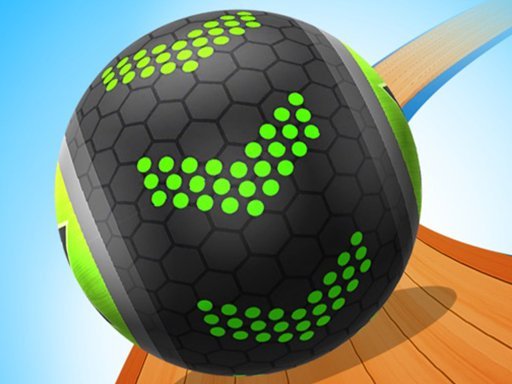
Rolling Rush 3D Arcade
What players say
Rolling Rush 3D Arcade keeps its scope narrow and executes it clearly. The one-touch steering and auto-forward ball make it immediately playable, while the rising speed provides a genuine difficulty curve rather than artificial padding. The 3D tracks add readable depth and visual variety. It suits players who enjoy quick reflex challenges and score chasing, though anyone wanting deep progression or story will find it thin. The lack of a time limit is a smart choice for casual play.
About
One-Touch Steering on a Fixed Track
Your ball moves forward on its own. You only decide when to shift left or right. That single choice—tap or swipe—is the whole control scheme, which is why the game works for short breaks and for players who don't want to learn a complex input layout. The track scrolls toward you, obstacles appear in your lane, and one collision ends the run. There is no time limit, so you can pause mentally between attempts without the game forcing a countdown.
Obstacles, Speed, and the Cost of a Mistake
Barriers and hazards are placed along the path, and the pace climbs the longer you survive. Early on, gaps are wide enough to correct a late reaction. Later, the ball covers ground faster, so a swipe that would have saved you ten seconds ago now arrives too late. Speed boosts may appear on the track; taking one when the lane ahead is clear raises your pace and your score potential, but it also shortens your reaction window. Hitting anything stops the run immediately—there is no health bar or second chance.
Why the 3D Look Matters
The tracks are rendered in 3D with bright, distinct environments. That perspective is not just decorative: judging distance and lane position is easier when the track has depth, and the visual variety gives each run a slightly different backdrop. The colorful worlds keep the screen readable even as speed increases, which helps you spot the next obstacle without straining.
Approach for Newer Players
Start by watching how far ahead the track renders and use that distance to plan one move at a time. Anticipating a barrier is more reliable than reacting to it. Stay calm when the pace rises; panic swipes tend to overshoot the lane you wanted. Treat each failed run as information about your timing rather than a loss, and use speed boosts only when the path ahead is visibly clear.
Compatibility
FAQ
Comments
Sign in to comment
You must be logged in before posting a review or rating.
No comments yet. Be the first to comment!





Editorial Notes