
Tile Sweep Puzzle Challenge
What players say
Tile Sweep Puzzle Challenge works because it adds an opponent to a familiar puzzle format. Instead of racing a timer, you weigh each tile's point value against its hazard risk while watching what your rival does. Adjustable difficulty and three time modes give it range, though the input does not describe online matchmaking details or platform specifics. Best suited to players who enjoy logical deduction with a competitive edge.
About
Turn-Based Tile Scoring
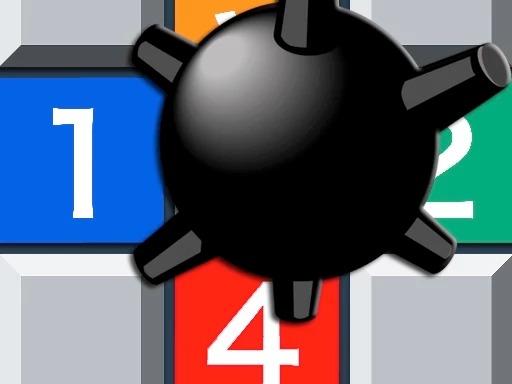
Tile Sweep Puzzle Challenge takes the tile-clearing puzzle format and turns it into a two-player contest. Participants alternate selecting squares on a shared grid. Each revealed tile shows a number indicating how many adjacent tiles contain hazards, and that number is added to the current player's score. The round ends when the board is fully cleared, and the player with the highest total wins. Selecting a hazard tile ends the match immediately for that player.
Difficulty and Time Settings
Before each match, players choose a skill level that sets the grid size and hazard density, ranging from beginner-friendly to expert. Three time modes adjust the pace: a fast option for quick sessions, a medium-speed mode, and a longer, more relaxed setting. These choices let newcomers learn the basics while experienced puzzle players find a suitable challenge.
Reading the Board
Because numbers reveal how many hazards sit next to a tile, each selection provides information about the surrounding area. Players must weigh the points a tile offers against the risk it carries. In timed modes, speed competes with careful analysis. Early moves often serve to map the board, while later moves become about securing safe points and anticipating what the opponent will do next.
Opponent Awareness
The competitive format means players cannot focus only on their own score. Watching which tiles the opponent avoids or targets can hint at where hazards might be. Adapting your own choices based on their behavior is part of the strategy. This duel structure gives the classic tile puzzle a different kind of replay value than a solo game against a timer.
Compatibility
FAQ
Comments
Sign in to comment
You must be logged in before posting a review or rating.
No comments yet. Be the first to comment!

Editorial Notes