
Color Cube Mission Puzzle
What players say
Color Cube Mission Puzzle offers a straightforward take on the classic block-clearing formula. Its 8x8 board and drag-and-drop controls are immediately understandable, and the absence of a timer makes it a low-stress option for casual play. The main limitation is that the input does not specify platform or progression details, so the experience may vary by version. Still, for players who enjoy logic puzzles and spatial reasoning, it provides a solid, family-friendly diversion.
About
Core Mechanics and Objective
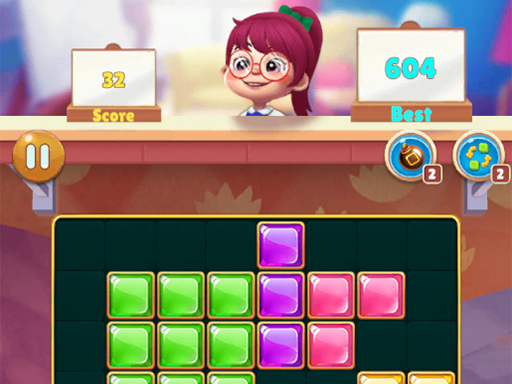
Color Cube Mission Puzzle places you in front of an 8x8 grid. Your task is to drag colorful cubes from the sides onto empty squares. The central rule is simple: fill an entire row or column with cubes, and that line disappears, freeing space and awarding points. You keep placing cubes until no valid moves remain. Because the board is small, every placement affects future options. The challenge lies in spotting how a single cube can complete one line while setting up another, rather than just reacting to the current shape.
Strategic Depth Without Timers
No countdown clock pressures your decisions. You can study the board, trace potential row and column completions, and choose placements deliberately. This untimed structure makes the game accessible to beginners and lets experienced players focus on planning several moves ahead. The main risk is filling the board too quickly. Clearing lines regularly keeps open space, but clearing a line that could have been combined with another may waste scoring potential. Some versions reward clearing multiple lines at once with a higher score, which encourages you to delay a clear until two or more lines can vanish together.
Visual Style and Progression
The board and cubes use vibrant colors that make it easy to distinguish different pieces at a glance. As you play, the game may introduce increasing complexity, though the exact progression depends on the version. The controls are intuitive drag-and-drop, so new players can start immediately. The game is designed for short sessions or longer play, fitting a casual schedule. It emphasizes logic and pattern recognition rather than reflexes, making it a suitable mental exercise for a wide audience.
Practical Tips for Better Scores
Plan each placement with the next two or three moves in mind. Keep the board as open as possible by clearing lines before they crowd the grid. Watch for opportunities to complete two lines with one cube, as combos often yield bonus points. If the board becomes congested, focus on clearing smaller sections first to regain breathing room. Consistent practice sharpens your ability to see patterns and anticipate which cube shapes will help most.
✅ Compatibility & Testing
FAQ
Comments
Sign in to comment
You must be logged in before posting a review or rating.
No comments yet. Be the first to comment!






Editorial Notes