

Candy Tile Link
What players say
Candy Tile Link succeeds as a casual puzzle game by removing time pressure and focusing on a single clear objective: turn every tile blue by linking adjacent matching candies. The gentle difficulty curve introduces new layouts without overwhelming, and diagonal connections add strategic depth. The bright, friendly visuals and unobtrusive background support longer play sessions. It is best suited for players who enjoy logic puzzles and pattern recognition in a relaxed setting, though those seeking scoring systems or competitive elements may find it too simple.
About
The Core Mechanic
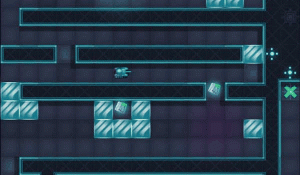
In Candy Tile Link, each board is a grid of candy tiles. Your task is to connect three or more adjacent tiles that share the same design by drawing a line through them. When a valid group is linked, those tiles change color to blue. The goal for every level is to turn all tiles on the board blue. This simple rule drives a loop of scanning the grid, spotting matching groups, and deciding which connections to make first.
Level Progression and Layouts
Levels are arranged in a sequence that gradually introduces new board configurations. Early levels use small, straightforward layouts to teach the basic linking rule. Later boards become more complex, with arrangements that demand careful planning to clear efficiently. Each board is a self-contained puzzle, and completing one unlocks the next. There is no scoring system or time pressure, so the only objective is to clear each board.
Controls and Accessibility
Controls are designed to work across devices. On a computer, you click and drag between tiles with a mouse. On a touchscreen, you swipe with a finger. Diagonal connections are allowed, which adds strategic depth without making the controls harder to learn. The game responds smoothly to both input methods, making it easy to pick up for players of any age or experience level.
Strategy and Pattern Recognition
While the rules are simple, success depends on recognizing patterns and planning moves ahead. Players who look ahead can often clear a board in fewer moves by connecting larger groups first. The game rewards patience and careful observation. Over time, regular play can sharpen these cognitive skills. Because there is no time limit, even challenging boards remain relaxing rather than stressful. This balance between simplicity and depth is a key strength of the design.
Compatibility
FAQ
Comments
Sign in to comment
You must be logged in before posting a review or rating.
No comments yet. Be the first to comment!





Editorial Notes