
Truck Tile Flip Challenge
What players say
Truck Tile Flip Challenge sticks to one well-executed idea: flip tiles, remember positions, clear the board. The absence of a timer makes it genuinely accessible to young children and anyone who dislikes reflex-based pressure. Difficulty scales through larger grids rather than new rules, so the game stays predictable. The main limitation is variety; there are no described modes or extras beyond the core matching loop, which may not hold players who want more than a quiet memory exercise.
About
How the Matching Works
Every round of Truck Tile Flip Challenge is built on one action: turning over face-down tiles to find pairs of identical truck illustrations. Flip two tiles and the game checks them. A matching pair stays visible; a mismatch flips both back over. The level ends when every pair has been found. Because the game imposes no time limit, you can pause before each flip and reason through what you have already seen rather than reacting under pressure.
Board Size and Progression
Difficulty comes from board size, not from new rules. Early layouts use a smaller grid with fewer pairs, which gives newcomers room to learn how the flipping and checking works. Later levels expand the grid, so more images compete for your attention and short-term recall. Each level is self-contained: you can restart from the first board or continue from where you stopped, and the growing layouts keep the task demanding without changing the underlying mechanic.
Look, Controls, and Access
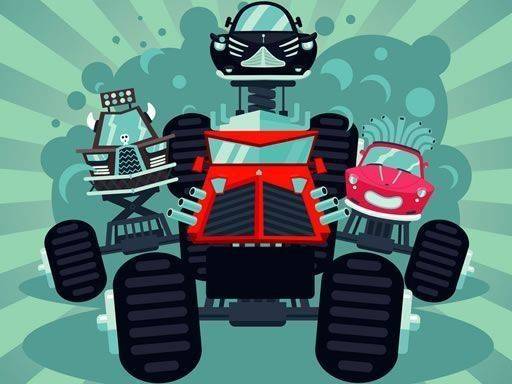
Bright, clearly differentiated truck graphics make each image easy to tell apart, which matters when the board fills up. The interface is deliberately plain: large tiles that accept both mouse clicks and touch input, and no complicated menus or settings to work through. A new game can begin as soon as the page loads, and nothing has to be downloaded or registered. That combination suits young children and adults equally, and it makes the game convenient for short breaks.
Playing With Fewer Mistakes
Memory improves faster when you stop trying to hold the whole board in your head. Work through one small section at a time, then repeat the process in other areas until you have built a mental map of where specific trucks sit. Reviewing the board before each flip costs nothing because there is no clock. Patience and regular practice reduce wrong guesses over time; speed is never rewarded.
✅ Compatibility & Testing
FAQ
Comments
Sign in to comment
You must be logged in before posting a review or rating.
No comments yet. Be the first to comment!






Editorial Notes