

Winding Trail Classic Puzzle
What players say
Winding Trail Classic Puzzle keeps its rules simple but uses them well: every orb you collect makes the board harder to navigate. The standard and timed modes give the same mechanic two different pressures, which adds replay value without complicating the controls. The soft visuals and uncluttered grid support longer sessions. The main limitation is that the concept is familiar, so players looking for entirely new mechanics may find it modest. It is best suited to casual players who enjoy spatial planning and steady score chasing.
About
The Core Mechanic and Player Goal
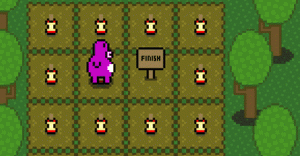
Winding Trail Classic Puzzle is a grid-based arcade game built around one continuous action: steering a small moving segment to collect orbs. Each orb picked up adds length to that segment, so the playfield becomes progressively more crowded. The real objective is not just collecting orbs but surviving the consequences of doing so. Because the segment never stops moving, players must think one or two steps ahead to avoid the outer boundaries and the trail they have already created. That tension between collecting and avoiding your own path is the entire challenge.
Two Modes, Two Rhythms
The game offers a standard mode and a timed mode. Standard mode removes the clock, letting players focus on methodical routing and high-score chasing. Timed mode adds a countdown that pushes quicker decisions and more dynamic movement. Both modes use the same core rules, but they produce distinctly different experiences. Standard suits players who prefer planning; timed suits those who want a faster pace. Switching between them changes the feel of the game without changing what you need to learn.
Visual Clarity and Controls
The presentation is deliberately clean: a soft color palette, a clearly defined grid, and orbs that stand out against the background. That visual restraint reduces eye strain during longer sessions and keeps attention on the board. Controls are simple, using touch gestures or directional inputs, so players of any age can start without a steep learning curve. Visual cues confirm when an orb is collected or a round ends, helping players understand what happened without confusion.
Progression and Difficulty
Early rounds move slowly and leave plenty of open space, giving new players room to learn the basics. As you progress, speed increases and the grid may introduce tighter corridors or more frequent obstacles. The difficulty ramp is smooth rather than sudden, so each step feels like a natural extension of the last. The game rewards consistent practice and thoughtful movement more than frantic reactions. That design keeps frustration low while still offering a genuine challenge for players who want to improve.
Compatibility
FAQ
Comments
Sign in to comment
You must be logged in before posting a review or rating.
No comments yet. Be the first to comment!




Editorial Notes