
Superhero Bounce Puzzle
What players say
Superhero Bounce Puzzle stands out by removing direct aim entirely. The swinging arm turns every shot into a timing decision, and the bounce physics make level layout reading essential. Early stages are simple, but later layouts demand careful planning and experimentation. The customizable skins add a light personal touch. It suits players who enjoy physics puzzles and do not mind retrying stages to find the right angle. The main limitation is that the input does not describe audio, story, or multiplayer, so those expecting a narrative or competitive mode should look elsewhere.
About
The Swinging Arm Challenge
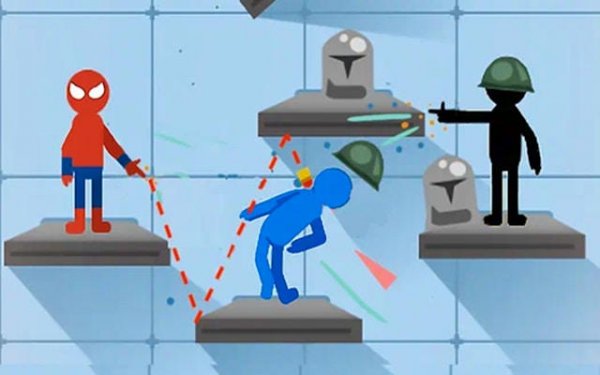
Superhero Bounce Puzzle builds its entire challenge around one constraint: the hero's arm never stops moving. You cannot simply aim and fire. Instead, you release an energy shot while the arm swings, which means every attempt depends on reading the rhythm and choosing the exact moment to shoot. That single mechanic turns each stage into a test of timing rather than precision aiming.
Reading the Bounce
Target dummies are scattered across each training stage, and your energy shots ricochet off walls, platforms, and other surfaces. The most efficient solutions involve finding angles that let one shot strike multiple dummies before losing momentum. Before firing, you need to study the layout and trace potential bounce paths in your head. Later stages introduce more complex arrangements, so a path that works early may not exist once the geometry changes.
Progression and Personalization
As you advance, level layouts grow more demanding, requiring you to adapt your strategy for awkwardly placed targets. The game also includes customizable hero skins, letting you change the look of your character between attempts. Sessions can be short or extended, since each stage is self-contained and quick to retry.
Approaching Each Stage
Patience matters more than speed. Observing the full layout before your first shot often reveals a bounce route you would miss by firing immediately. When a target seems unreachable, experimenting with different release points on the arm's swing usually exposes a new angle. Learning from failed attempts is part of the design, not a sign you are playing wrong.
Compatibility
FAQ
Comments
Sign in to comment
You must be logged in before posting a review or rating.
No comments yet. Be the first to comment!



Editorial Notes