
Puzzle Ball Block Logic
What players say
Puzzle Ball Block Logic succeeds by removing pressure. There are no timers, no score multipliers, and no penalty for resetting a level. That design choice puts the focus squarely on spatial reasoning: you study a block layout, slide and rotate pieces into a continuous path, then tap the ball to test your solution. The gradual introduction of new obstacles keeps the challenge from stagnating, and the family-friendly presentation lowers the barrier for younger players. The main limitation is inherent to the genre—if you prefer fast-paced puzzles or games with narrative hooks, this may feel too quiet. For players who enjoy logic puzzles and problem-solving at their own speed, it delivers exactly what it promises.
About
Building the Ball's Route
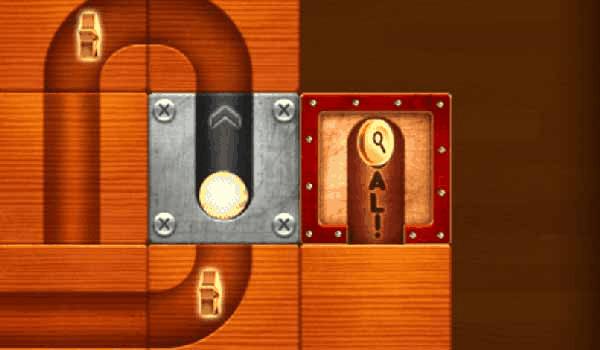
Every level in Puzzle Ball Block Logic hands you a fixed arrangement of wooden blocks and a ball waiting at a starting point. The blocks are not decoration; they are the track. You drag or tap them to slide, rotate, or reposition each piece until the gaps line up into one unbroken surface. The ball only moves after you tap it, so the entire planning phase happens before any motion begins. That pause is what separates this from reflex-based puzzlers: you are solving a spatial layout problem, not racing a timer.
Reading the Board Before You Move
The challenge comes from how blocks interact. A rotated piece can close a gap but open another, and a shifted block might create a slope the ball cannot climb. Because there are no time limits, you can study the layout, test a configuration, and reset instantly if the ball stalls or drops off the edge. Each failure is informative rather than punishing, which keeps the pace calm and encourages experimentation.
How Difficulty Grows
New obstacles and block types appear gradually as you progress. Rather than dumping every mechanic into the first few levels, the game introduces one twist at a time, so the mental model you built earlier still applies. This pacing means the early levels teach the basic slide-and-rotate vocabulary, while later layouts ask you to combine those moves in less obvious orders.
Who This Suits
The controls are simple enough for children, and the absence of timers or fail states makes it comfortable for anyone who prefers thinking over reacting. The colorful visuals and relaxing music support that tone. If you enjoy logic puzzles where the solution is visible once you see it, this fits that niche well.
Compatibility
FAQ
Comments
Sign in to comment
You must be logged in before posting a review or rating.
No comments yet. Be the first to comment!




Editorial Notes