
Paired Cycle Speed Challenge
What players say
Paired Cycle Speed Challenge stands out by making vehicle balance the core skill. The linked two-rider frame forces players to think about weight and coordination on every turn, while moving traffic and fixed barriers keep track reading essential. Level objectives like collision limits and minimum speeds add structure beyond simply finishing. It suits players who enjoy precision driving and steady improvement, though those seeking pure high-speed arcade action may find the deliberate handling less immediately exciting.
About
The Linked Motorbike Setup
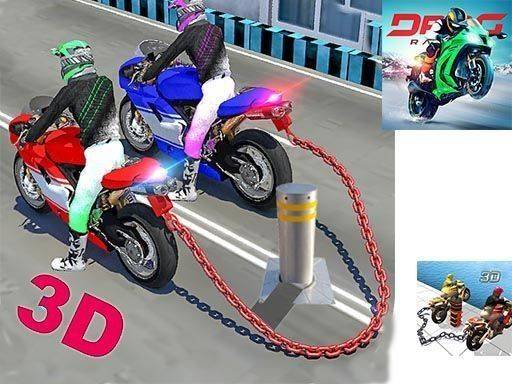
What separates Paired Cycle Speed Challenge from a standard arcade racer is its two-rider motorbike. The riders are joined by a frame, and that physical link directly affects how the vehicle responds. Turns require both halves to work together; acceleration shifts weight in ways a single-rider bike would not. The physics model simulates tandem weight and balance, so each corner becomes a precision test rather than a simple steering input.
Reading Tracks and Traffic
Courses mix fixed barriers with moving traffic, and layouts range from sharp bends to long straight sections. Players need to learn where obstacles appear so they can plan a line through each course. Success depends on looking ahead and adjusting speed early. Sudden movements upset the bike's balance, so a smooth driving style is rewarded over aggressive, last-second corrections.
Controls and Real-Time Feedback
On-screen buttons handle acceleration, braking, and steering. The game gives clear visual cues when the bike leans too far or when a drift is executed cleanly. That feedback helps players connect their inputs to the vehicle's behavior. The learning curve is gentle enough for newcomers to grasp the basics quickly, while the paired bike mechanics still offer depth for players who want to refine their technique.
Objectives Beyond the Finish Line
Reaching the end of a track is not enough. Each level includes specific objectives, such as avoiding a set number of collisions or maintaining a minimum speed. These goals push players to improve rather than simply survive. Regular play builds muscle memory for the tandem handling, and lap times and obstacle avoidance tend to improve steadily with practice.
✅ Compatibility & Testing
FAQ
Comments
Sign in to comment
You must be logged in before posting a review or rating.
No comments yet. Be the first to comment!



Editorial Notes