
Light On Logic Puzzle
What players say
Light On keeps its rules minimal: place bulbs, light every empty cell, and respect walls that block beams. The challenge grows through tighter bulb counts and more obstructive walls rather than new mechanics. That focus makes it easy to learn but still mentally engaging. It suits players who prefer deduction over reflexes and want a puzzle they can pause or revisit without pressure. The main limitation is that the input does not describe audio, story, or platform-specific features, so those remain unknown.
About
What Light On Asks You to Do
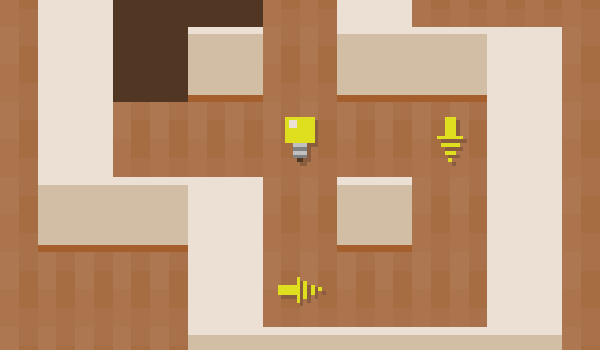
Light On presents a dark grid and a fixed supply of bulbs. Your task is to place those bulbs so that every empty cell is lit. Each bulb projects light horizontally and vertically, but walls stop the beam. You cannot use more or fewer bulbs than the level provides, so placement matters as much as coverage. The game shows which cells are lit and which remain dark, giving immediate feedback after each move.
How a Puzzle Unfolds
Early grids are open, with few obstacles and generous bulb counts. As you progress, walls appear that block light in specific directions, and the number of available bulbs shrinks. These two changes force you to think about line of sight and overlap. You click or tap any empty cell to place a bulb, and click it again to remove it. There is no timer and no penalty for mistakes, so you can test an idea, see the result, and adjust without pressure.
Why the Rules Stay Simple
The entire system rests on one action—placing or removing a bulb—and one condition—every empty cell must be lit. That simplicity makes the game easy to learn but still capable of demanding spatial reasoning. Because walls block light, you cannot rely on a single bulb to cover a whole row and column. You have to identify which cells can only be reached from one direction and place bulbs accordingly. The clean interface keeps the focus on the grid itself.
Who Will Enjoy This
Light On suits players who like logic puzzles that reward careful thought rather than speed. The absence of timers and penalties makes it approachable for families and for anyone who wants a low-stress mental workout. Sessions can be short or long, depending on how many puzzles you choose to solve. If you enjoy deducing placement from limited information, the gradual introduction of walls and tighter bulb counts gives you a steady increase in challenge without changing the core rules.
Compatibility
FAQ
Comments
Sign in to comment
You must be logged in before posting a review or rating.
No comments yet. Be the first to comment!







Editorial Notes