Four Piece Tanagram Puzzle
Review
Four Piece Tanagram is a well-crafted puzzle game that respects your time. The lack of a timer makes it ideal for relaxed problem-solving. Each puzzle feels fresh, and the gradual difficulty curve ensures steady improvement. It is a solid choice for anyone wanting a mental workout without stress.
About This Game
Game Introduction
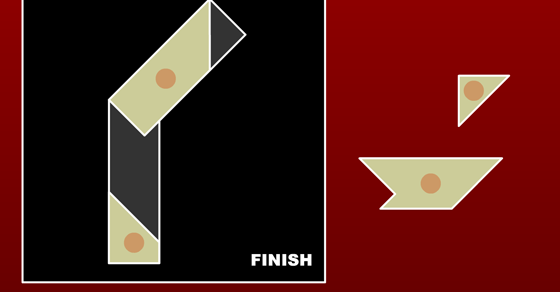
Four Piece Tanagram is a classic puzzle game that challenges your spatial reasoning and problem-solving skills. You are given a set of four weird shapes, and your goal is to arrange them perfectly to form a given, bigger weird shape. This game is a delightful brain teaser that tests your ability to visualize and manipulate shapes. It is suitable for players of all ages, offering a fun and educational experience. The puzzles start easy and gradually become more complex, keeping you engaged and entertained. Whether you are a puzzle enthusiast or just looking for a relaxing mental workout, Four Piece Tanagram provides a satisfying challenge that sharpens your mind.
How to Play
To play Four Piece Tanagram, simply drag and drop the four shapes onto the board. Rotate or flip them as needed to fit them together and form the target shape. The game provides a visual guide of the target shape, so you know what you are aiming for. There is no time limit, so you can take your time to experiment with different arrangements. The key is to think creatively and try different combinations until the pieces fit perfectly. Each puzzle is a unique challenge, and completing it gives a great sense of accomplishment. The controls are intuitive and easy to use, making it accessible for players of all skill levels.
Game Features
Classic puzzle gameplay with shape manipulation. No time pressure allows for relaxed play. Progressive difficulty keeps the mind engaged. Simple drag-and-drop controls work on any device. Each puzzle has a single correct solution, rewarding careful thinking.
Tips for Success
Start by examining the target shape closely to understand its outline. Try rotating each piece to see how it might fit. Work from the edges inward, as corners often provide clues. If stuck, take a break and return with fresh eyes. Practice regularly to improve your spatial reasoning. Remember, patience and experimentation are key—there is always a solution.